Contact us
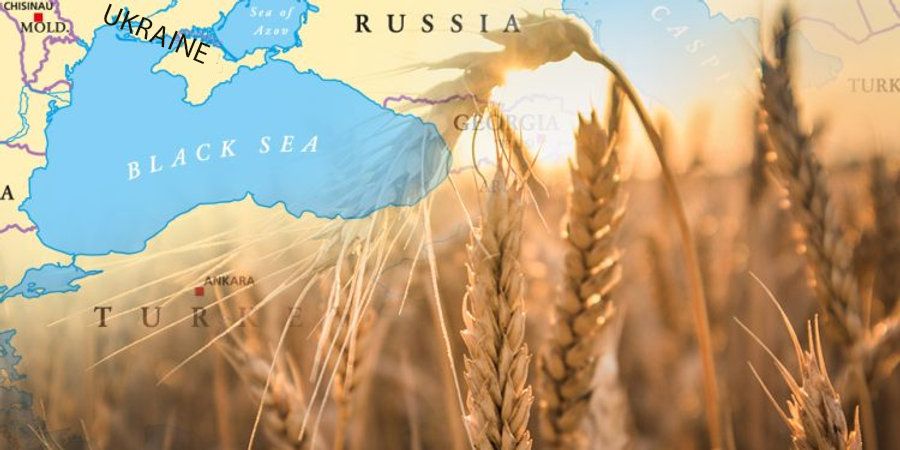
A further escalation of reciprocal Ukrainian and Russian attacks on port and grain logistics could sharply reduce supplies from the Black Sea region and trigger a new global grain crisis. Ukraine and Russia together account for around 27% of global wheat exports, with most of these volumes traditionally shipped through the Black Sea, according to the Financial Times.
Risks to the market have risen sharply as strikes increasingly disrupt the export infrastructure of both countries. Ukrainian attacks have knocked out major grain terminals in Novorossiysk, which handle more than 40% of Russia’s grain exports. At the same time, Russia has intensified attacks on Ukrainian Black Sea ports and merchant vessels. As a result, grain exports from both countries could be significantly curtailed and, in the event of further escalation, partially or completely halted.
The situation is worsening at an extremely unfavorable time for the global market. Heat and other weather-related problems have weakened production prospects in Europe and the US, while the war in the Middle East has pushed up fuel and fertilizer costs. As a result, global wheat prices are already more than 25% above last year’s level. Separately, the UN expects around 50 mln people to face acute food insecurity this year due to climate-related factors, while the loss of Black Sea grain supplies could further aggravate the situation.
The greatest risks are for countries in the Middle East and North Africa, many of which rely heavily on Ukraine and Russia for wheat supplies. Rapidly replacing a potential decline in Black Sea shipments would be difficult, as alternative exporters are also facing weather and production risks, while redirecting large grain volumes through other routes increases logistics costs. The Financial Times also notes that the disruption is occurring just as the peak export period for the Black Sea region’s new crop is beginning.
Alexander Gabuev, the article’s author and director of the Carnegie Russia Eurasia Center in Berlin, argues that the international community should press Moscow and Kyiv to restore the free passage of agricultural cargoes through the Black Sea, following the model of the previous grain deal. In his assessment, the military benefits of attacks on agricultural exports are limited, while the consequences for import-dependent countries could be significant. Such a Black Sea truce could not only reduce risks to global food markets but also serve as a first step toward broader de-escalation of the war.
© Association of producers,
Processors and Exporters of Grain, 1997-2026.
When quoting and using any materials
reference to the Ukrainian Grain Association is obligatory.
If you use the Internet, you must also use
the hyperlink to https://uga.ua
 Site development
To register on the website, please contact the administration UGA admin@uga.ua