Contact us
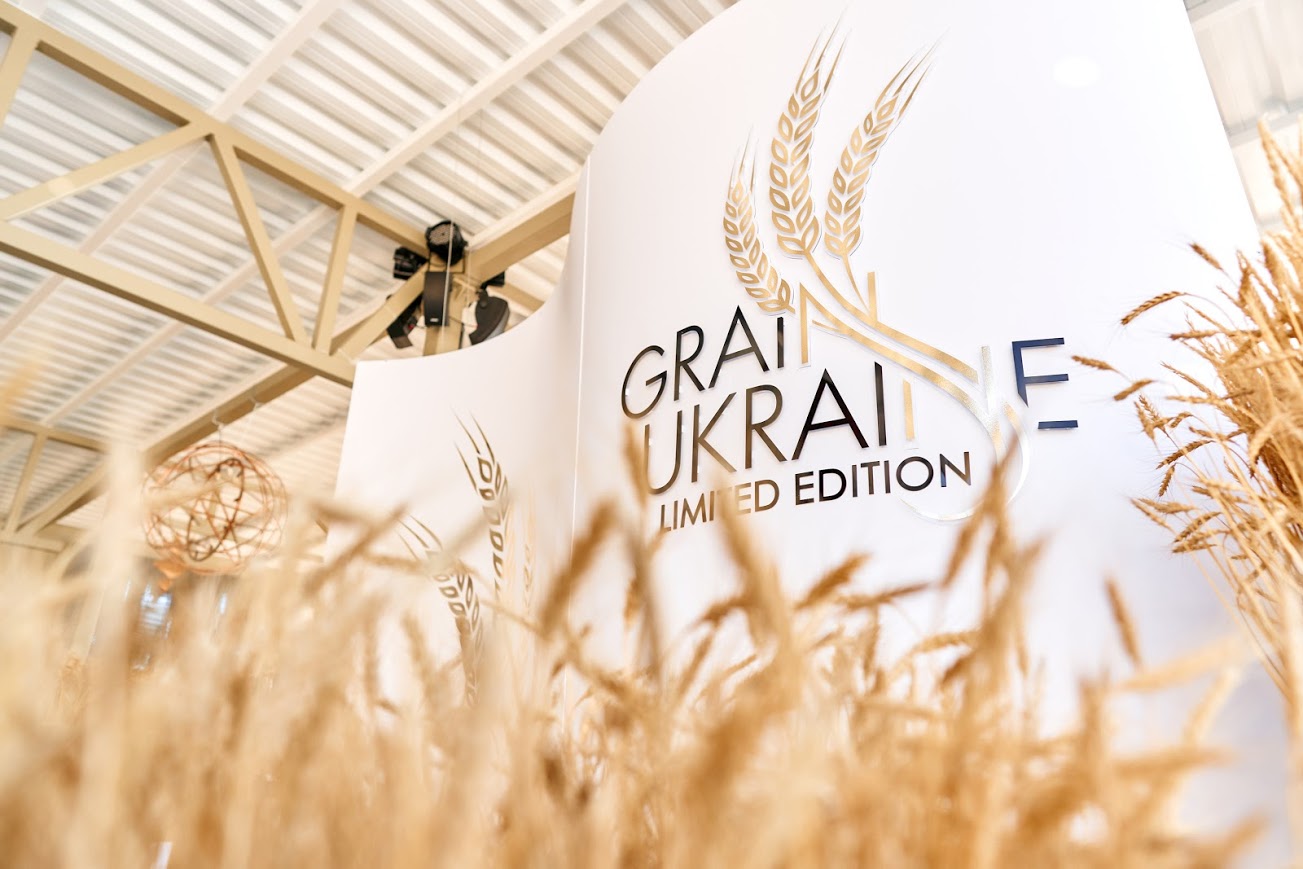
This year Grain Ukraine had a Limited Edition adding due to the coronavirus pandemic. But it did not prevent the participants unlimitedly discussed key challenges of the grain market and future steps for business and government to strengthen the Ukrainian producers position in the world.
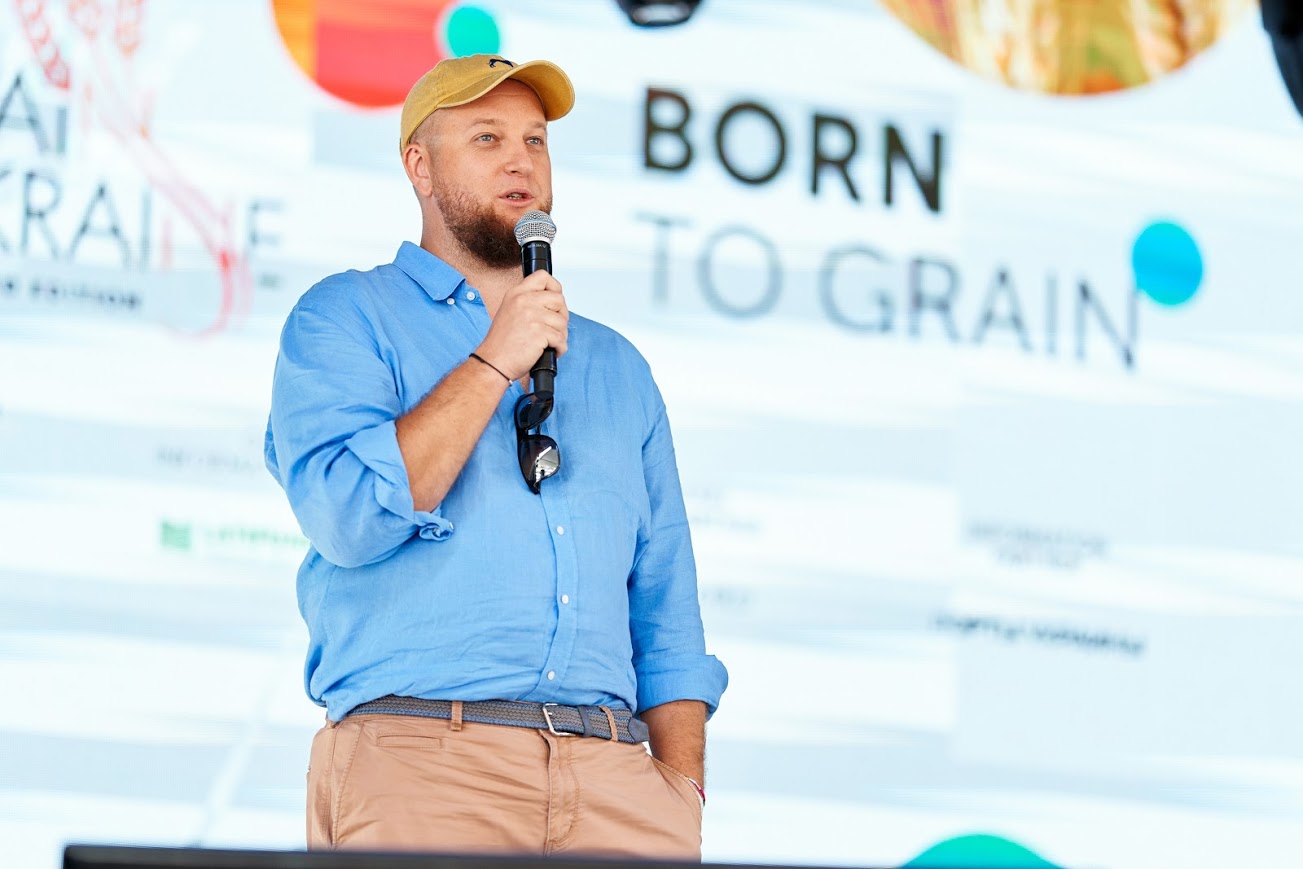
Grain Ukraine speakers continued last year’s optimism about Ukrainian grain market development: local farmers once again beat the record and become the world’s 2nd largest exporter of grain (in foreign currency revenue). The players set a new benchmark for themselves — to measure success not in tons, but in money. Taras Kachka, Deputy Minister of Economic Development, Trade and Agriculture of Ukraine, Trade Representative of Ukraine, Deputy Chairman of the International Grains Council (IGC), said on the trading panel that we used to high scores in volume, but for him personally it’s important to increase ‘dollar-over-dollar’ results: either sell more or spend less.
This was supported by another panelist — Olga Trofimtsova, Chief business development officer of Epicenter Agro. She said that farmers have to think in terms of profit, because it is a business, but, surely, do not forget about the environment, soils, and biodiversity. ‘Cause the recent trends show decreasing profitability of cereals. Therefore, Ukraine is active at promising markets: Europe and Asia. A special guest of the trade panel was Baskara Pradipta, Minister Counsellor for Economic Affairs of the Republic of Indonesia in Ukraine. Ukraine today is Indonesia’s largest grain supplier, pushing Australia from that position Nikolay Gorbachov, president of the Ukrainian Grain Association, said that a new generation of Indonesians consumes less rice and more wheat, and also Indonesia has a positive demographic situation. Europe also remains a prospective market, where Ukraine exported 10 million tons of corn last year, and 14 million tons a year earlier.
The long-delayed liberalization of Ukrainian agricultural land market also helps to develop business thinking. Market players and experts agreed that the enactment of the law is a big step for Ukraine, and will stimulate an increase in capitalization. Roman Leshchenko, the head of the The State Service of Ukraine for Geodesy, Cartography and Cadastre, outlined the situation on the land panel: the paradox we lived in so many years with the myths of “take the land out of the country by trains” should end, since the moratorium contributed to fictitious tenders, documents falsification and illegal turnover of grains. Thanks to the law, land will be a free commodity in our country, and nobody’s political wishes can change it, said Olga Balytska, Head of Real Estate practice at PwC Legal Ukraine.
However, experts agreed that the new law is not liberal enough. Tymofiy Mylovanov, President of the Kyiv School of Economics, former Minister of Economic Development, Trade and Agriculture of Ukraine, openly said that the law is bad, and the hectares restriction is a restriction of competition. The economist believes that only part of the reform has been implemented, and the ‘schemes’ will continue, because state bodies are too weak to fight corruption, and the parliament does not have enough votes to stop this.
According to Oleksiy Mushak, Adviser to the Prime Minister for questions about agrarian politics and land issues, the new law triggers many processes. Large companies will think about what to do with it, since they lose to medium-sized companies in efficiency. The mid-level companies will have another challenge: despite the low price, the land market does not give state support for individuals.
The Deputy Minister of Economic Development, Trade and Agriculture of Ukraine for Agricultural Policy Taras Vysotsky assured that state investments will come, but gradually. He added that due to the new law, thousands of farms, free of additional tax burden, will finally get land in private ownership and reach a new level.
Speaking about investments in Ukrainian agro, Andriy Pavlushin, Chairman of OTP Leasing, stated that hope for land reform was in vain. Its lack of liberality will be a barrier for foreign investors.
The cofounder of the Center for Economic Recovery Anatoliy Amelin drew attention to the fact that during the pandemic all active investments were paused. In addition, Ukraine has no strategy of sectoral development, and it slows investors’ interest, an investor is not a sponsor.
Olexander Kuperman, Member of Supervisory Board of PJSC Bank Vostok, emphasized that Ukraine has enough resources, the problem is distrust, not money. However, with a good liquid tool, such as land, even local banks will provide adequate interest rates, and foreign ones will come with investments.
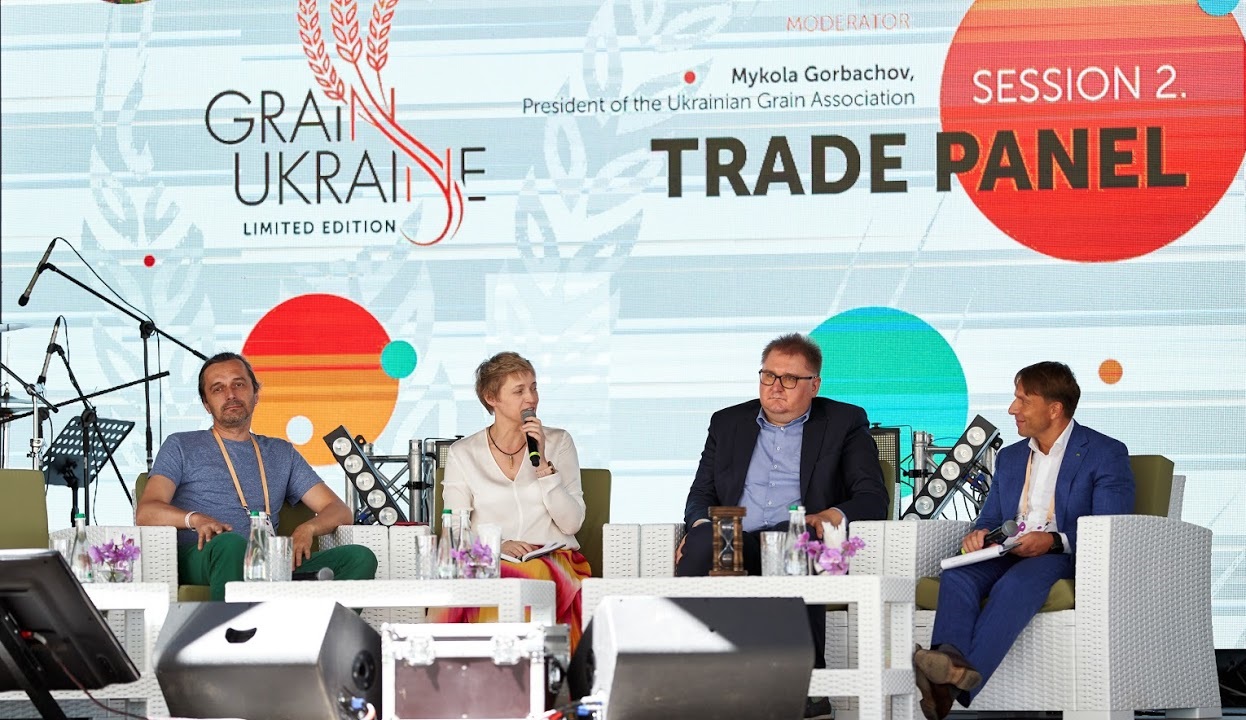
The surge in protectionism, particularly in the EU, was also among the issues raised at Grain Ukraine 2020. Trade panel speakers showed how ecological regulations become a part of protectionist policies, and the COVID-19 only reinforced the trends. Volodymyr Lapa, Strategic Development Advisor to the President of UCAB, said that while the EU restricts pesticide use to protect bees it now introduces new MRL (maximum residue limit of pesticide) for import, protecting European farmers. This is the political side of green decisions. That’s why Ukraine must more actively lobby its interests in the international grain arena.
Olga Trofimtsova reminded that Ukraine is a member of the WTO, International Grains Council and other associations. She shared the opinion that until recently the country passively participated in international organizations, for various reasons — from bad knowledge of English to professional moments — and now we need more active representation. Not only the government should make it, but also business, that pushes authorities to support and promote Ukraine in foreign markets. Taras Kachka emphasized that Ukraine was, is and will be one of the main players in the world grain market. We have grown up to hold Ukrainian discussions not a year after the European ones, but set the agenda on pesticide policy and other issues.
Taras Kachka also noted that coordination between the government and business recently improved. It resulted in this year’s 20.5 million tons of wheat export. It was achieved ‘cause all Ukrainian stakeholders were able to manage stress, and this is a sign of coordination between market players and the government with a common goal to be a predictable partner.
Wine industry of the South of Ukraine also spoke about public-private partnership. At the round table “South of Ukraine. Potential for the winegrowing development” Ivan Plachkov, founder of the family company Colonist, said that Ukraine’s potential in wine production is huge, and to implement it, we need to solve land and irrigation issues, and also close borders for counterfeit wines. Giorgi Iukuridze, co-founder of SHABO, added that Ukraine has to be positioned globally as a wine country. Eduard Gorodetsky, CEO of Odessa Cognac Factory, supported his colleagues and continued the ‘wish list’ of industry changes with need to reduce excise prices and lending rates, as well as state support. To name a one, the transfer of still and sparkling wines from the alcoholic beverages to the food products category.
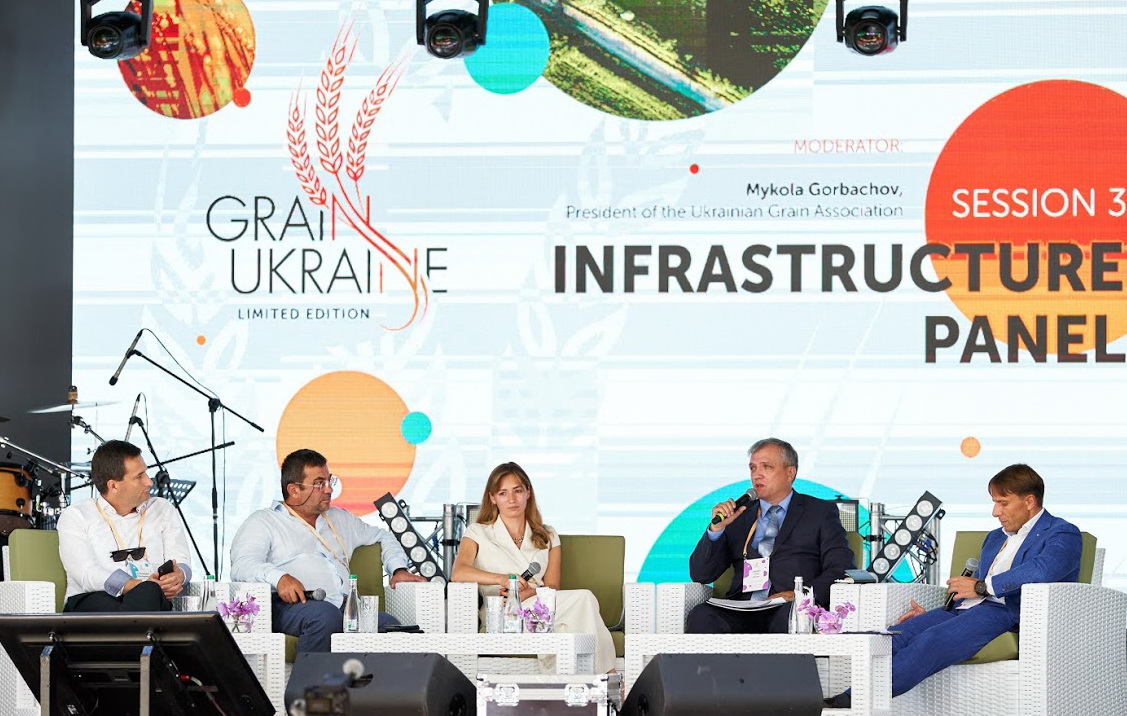
Constructive dialogue between business and authorities, which lead to effective organizational and administrative decisions, also mentioned when talking about river transportation of grain, that became an alternative to railway. Last year’s Grain Ukraine speakers called the delivery to ports the main challenge for Ukrainian grain growers. This year the infrastructure panel was dedicated not to rail transport, but to river transportation. Moderator Nikolay Gorbachov opened the discussion with the fact that 5 million tons of grain and oil cargo are already transported by river, and it’s expected to triple this figure.
The panelists discussed that the state, as the rivers owner, should spend the money from carriers on river infrastructure, its repair and modernization. Shota Hadzhishvili, co-founder and CEO of RISOIL S.A., called for a revival of mass barge construction in Ukraine, rather than importing “Rhine metal waste from the 1970s”. Andriy Volik, Deputy General Director of NIBULON JV LLC for construction, fleet operation and shipping safety, said that the staff of 1,000 Nibulon’s qualified workers is enough to build barges, and 77 ships had already been built by the company.
This panel discussed the bill regulating the river transportation market in Ukraine. Olga Kopiyka, co-chairman of the Logistics Committee of the European Business Association, counted its positive moments: absence of additional river tolls, abolishment of port dues, described financing of river stopgates. She also mentioned the negatives, such as licensing of all types of cargo. The expert supported the creation of a special fund for rivers, but stressed that it is necessary to clearly prescribe in law the mechanism of its operation.
Oleksandr Holodnytsky, Acting Head of the State Enterprise Administration of Sea Ports of Ukraine (USPA) shared the opinion that rates should be reduced several times, perhaps up to 30%, and assured that USPA supports the entrepreneurs and defending their interests. At the same time, he asked the business “not to bite every minute”. USPA plans to report quarterly, introduced a “complaint and suggestion book”, obliged all its branches to prescribe the executor, deadline, etc. for each complaint.
Despite the existing challenges, Grain Ukraine 2020. Limited Edition started and ended with optimism. The conference’s founder, co-owner and CEO of TIS port, co-owner of Neptune grain terminal, Andriy Stavnitser, opened the event with a clear message. Despite a pandemic, abnormally dry winter, summer floods and general uncertainty, his company managed to exceed 17.4 million tons of cargo in the first half of 2020 and successfully concludes the sale of 51% shares of the TIS container terminal to the global investor DP World, and now he differently perceives the phrase “Do your duty, come what may”. Even if the whole world is shut down, people can’t live without food.
On July 11, under the auspices of Grain Ukraine, there was a round table at the initiative of the Ministry of Infrastructure of Ukraine with the participation of the Minister of Infrastructure Vladyslav Krykliy. The purpose of the meeting was to discuss a memorandum on cooperation in ensuring and strengthening road safety between the Ministry of Infrastructure of Ukraine, the State Transport Safety Service of Ukraine, the State Enterprise Industry Center For Digitalization And Cybersecurity and stevedoring market players.
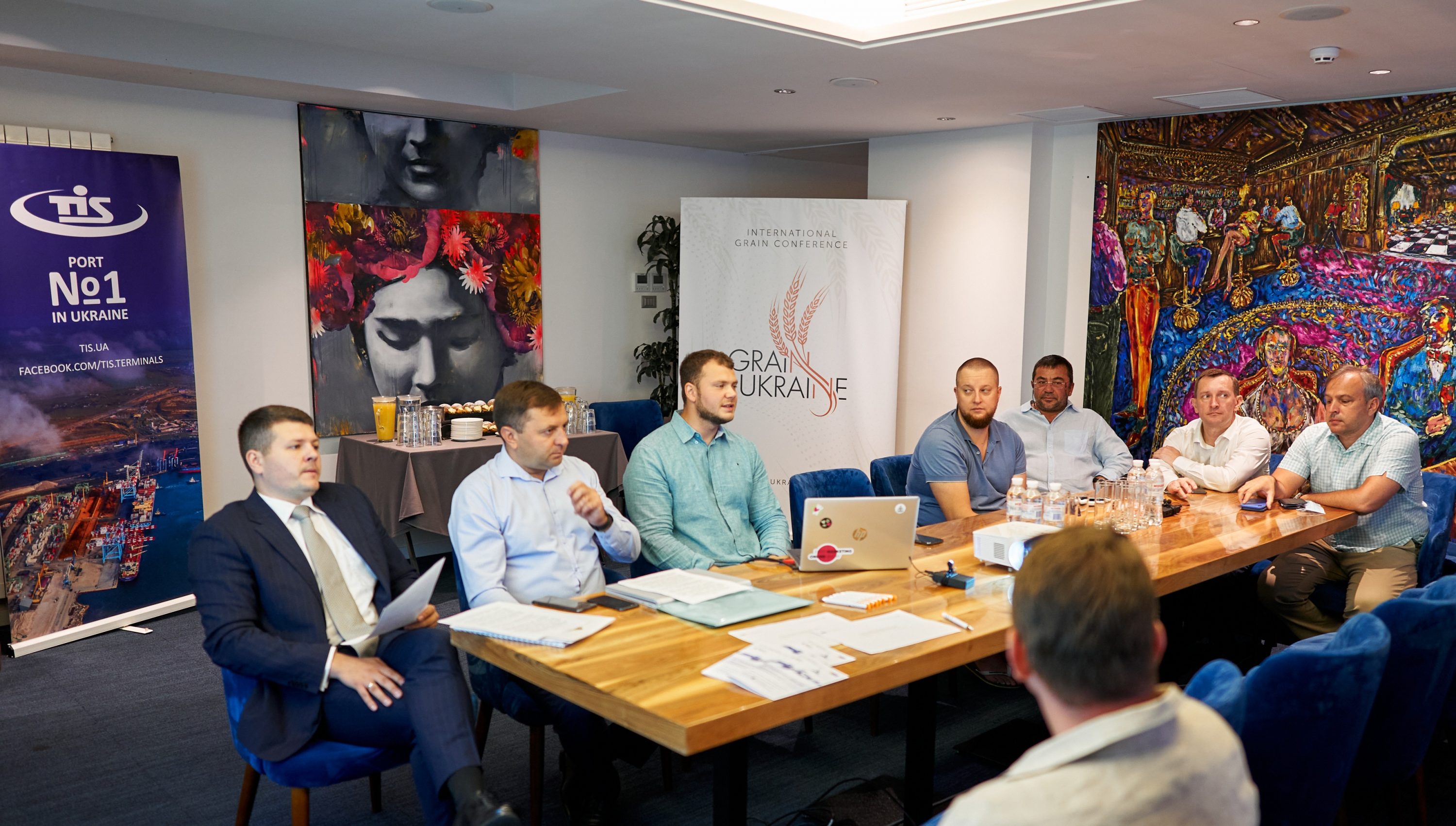
The organizer of the Grain Ukraine 2020 conference is Ideas First, the co-organizer is TIS group of companies.
The Grain Ukraine Conference is an international industry platform for the dialogue of the largest representatives of the grain market, heads of Ukrainian agricultural and food companies, commercial and investment banks, logistics and raw materials companies, as well as technological trendsetters. It discusses the latest trends in the agrarian market, as well as the development of sustainable business models and the introduction of technological agro-innovations. More about Grain Ukraine. Limited Edition 2020 you can find on its facebook page facebook.com/grainukraine.
© Association of producers,
Processors and Exporters of Grain, 1997-2026.
When quoting and using any materials
reference to the Ukrainian Grain Association is obligatory.
If you use the Internet, you must also use
the hyperlink to https://uga.ua
 Site development
To register on the website, please contact the administration UGA admin@uga.ua